
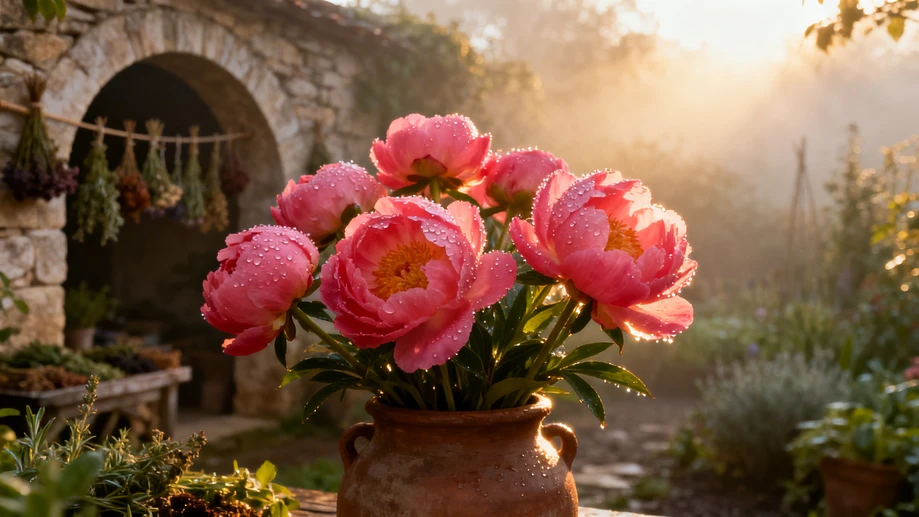
The Peony's Secret Power: How This Flower Became a Symbol of Healing Across Centuries
Uncover the fascinating medicinal legacy behind those lush petals that transformed gardens into ancient pharmacies
When you admire a peony's extravagant blooms today, you're witnessing a living relic of ancient medicine. Long before these flowers graced wedding bouquets or Instagram feeds, they served as nature's pharmacy in civilizations across Eurasia. Greek physicians like Dioscorides documented peony roots as early as 40 AD for treating nightmares and childbirth complications, while Chinese herbalists prized them even earlier for calming liver disorders and muscle spasms. The very name "peony" derives from Paeon, the Greek god's physician who used the plant to heal Pluto's wounds. Imagine medieval monks harvesting crimson petals at dawn, their baskets overflowing with what they called "the rose without thorns" - not for decoration, but for apothecary jars storing tinctures to ease epilepsy and stomach pains.
What makes this botanical so medicinally versatile lies beneath the soil. Peony roots contain unique compounds like paeoniflorin that act as natural antispasmodics, relaxing muscles from the uterus to the digestive tract. Traditional Chinese Medicine still utilizes "Bai Shao" (white peony root) in formulas balancing female reproductive health, while European folk healers applied poultices of crushed petals to soothe gout-ridden joints. During the Black Death, peonies joined lavender and sage in plague-beating posies carried to ward off miasma. Even Shakespeare referenced their healing properties when Ophelia distributed flowers in Hamlet, symbolizing the plant's cultural penetration beyond mere aesthetics.
Modern science now validates what herbalists intuited. Clinical studies confirm peony extracts reduce inflammation markers by 40% in arthritis patients and demonstrate neuroprotective effects against Alzheimer's-related brain inflammation. Pharmaceutical companies isolate paeoniflorin for clinical trials targeting menstrual pain and irritable bowel syndrome, with one Korean study showing 68% reduction in PMS symptoms. Yet the most poetic validation comes from cancer wards where peony-root derivatives help mitigate chemotherapy-induced nausea, bringing full-circle a 2,000-year legacy of comfort. Next time you see these blooms, remember: those ruffled petals represent centuries of human ingenuity harnessing nature's resilience against suffering.
Beyond laboratories, peony's healing heritage thrives in everyday rituals. Home gardeners still brew petal-infused teas for headache relief, while natural dyers harness root tannins to create anti-microbial fabrics. In Japan's kampo medicine, peony-based formulas ease night sweats during menopause, and organic farms cultivate specific "herbal peony" varieties distinct from ornamental cousins. Even urban foragers identify Paeonia officinalis growing wild near old monastery sites - living monuments to botanical wisdom that outlasted empires. As we face modern health challenges, this flower reminds us that sometimes the most potent remedies grow quietly in our own backyards, waiting to be rediscovered.
The peony's journey from healer to horticultural star reveals humanity's enduring dialogue with nature. While we no longer rely on its roots to ward off evil spirits, contemporary science illuminates why ancient civilizations revered it. Those lavish blooms that signal summer's arrival carry within their cells molecular blueprints for relief - a testament to how beauty and utility intertwine in the natural world. Perhaps this dual legacy explains why peonies remain globally beloved: they embody hope, resilience, and the quiet power of living things to mend both body and spirit across generations.