
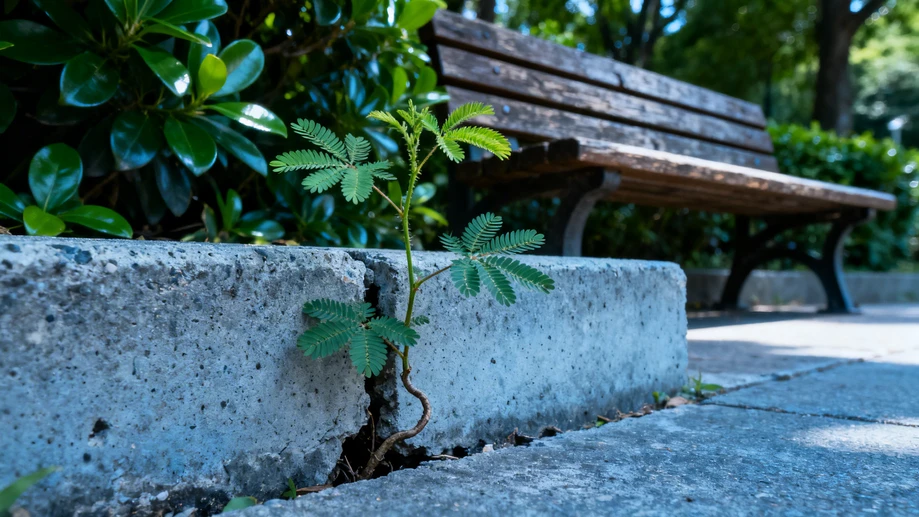
The Astonishing Survival Skills of the Sensitive Plant in Our Concrete World!
Uncover how this delicate-looking wonder thrives against all odds, transforming urban spaces into green sanctuaries with its incredible adaptability.
Picture this: you're strolling through a bustling city park on a sunny afternoon, and your eyes catch a cluster of feathery green leaves nestled among the concrete benches. As you gently brush against one, the leaflets snap shut in a blink, like tiny hands folding in prayer. This is the Mimosa pudica, commonly known as the sensitive plant or touch-me-not, and it's not just a quirky garden curiosity—it's a master of survival in the unlikeliest places. While many plants wilt under the harsh glare of urban life, this humble species has evolved to turn adversity into opportunity, thriving in environments where others would wither away. Its rapid leaf-folding response isn't just a party trick; it's a clever defense mechanism that helps it conserve energy and avoid predators, making it a symbol of resilience in our fast-paced world. From backyards to balcony gardens, the sensitive plant teaches us that even the most fragile-looking beings can adapt and flourish, reminding us to pause and appreciate nature's hidden strengths in everyday settings.
Originally hailing from the warm, humid tropics of South America, the sensitive plant naturally favors moist, shaded areas under dense forest canopies, where rainfall is abundant and temperatures rarely dip below freezing. In its native habitats, like the Amazon basin, it carpets the forest floor, its roots soaking up nutrients from rich, loamy soil while its delicate pink flowers attract pollinators in a vibrant dance of life. This idyllic setting might seem worlds away from the noisy streets of modern cities, but here's the twist: the plant's inherent flexibility allows it to colonize new territories with surprising ease. When seeds hitch a ride on animals or human travelers, they can sprout in unexpected corners—think abandoned lots, roadside cracks, or even potted plants on apartment balconies. Unlike fussier species that demand perfect conditions, Mimosa pudica adapts to varying soil types, from sandy patches to clay-heavy earth, as long as it gets a dose of sunlight and regular moisture. This adaptability isn't just luck; it's a testament to millions of years of evolution, equipping the plant to spread across continents and become a common sight in gardens worldwide.
Transitioning to urban jungles, the sensitive plant doesn't just survive—it often thrives, turning neglected spaces into mini-ecosystems that buzz with life. In cities like New York or Tokyo, you might spot it peeking through sidewalk grates or flourishing in community gardens, where its low-maintenance nature makes it a favorite among busy urban dwellers. For instance, a single plant can grow rapidly in a small pot on a windowsill, requiring only occasional watering and indirect light, while its ability to fix nitrogen in the soil improves the health of surrounding plants. This practical benefit extends beyond aesthetics; in polluted areas, the sensitive plant acts as a natural air purifier, absorbing toxins and releasing oxygen, much like a silent guardian against urban smog. Yet, despite these advantages, there's a catch: the plant faces challenges like drought or temperature fluctuations, which can trigger its defensive folding more frequently. But here's the remarkable part—it bounces back quickly, with new shoots emerging after rain or a bit of care. This resilience makes it an ideal starter plant for beginners, encouraging people to reconnect with nature in their own homes without needing expert skills or expensive tools.
Of course, adapting to human-dominated environments isn't without hurdles, and the sensitive plant's journey highlights both triumphs and vulnerabilities in our changing world. In drier climates or during heatwaves, its leaves may stay closed for longer periods to conserve water, signaling stress that could stunt growth if ignored. Similarly, in areas with heavy foot traffic or pollution, the plant might struggle to establish deep roots, leading to shorter lifespans compared to its forest counterparts. However, this is where the story takes an uplifting turn: gardeners and nature enthusiasts have learned to mimic its natural habitat, using simple tricks like mulching to retain moisture or placing pots in shaded spots to shield it from scorching sun. By observing these subtle cues—such as the speed of leaf movement—people can gauge the plant's health and intervene, fostering a deeper connection to the rhythms of nature. This hands-on approach not only helps the sensitive plant flourish but also transforms urban balconies into thriving green oases, proving that even in the heart of a concrete desert, life finds a way to persist and inspire.
Ultimately, the sensitive plant's tale of urban survival is more than a botanical curiosity—it's a powerful lesson in perseverance that resonates in our daily lives. As cities expand and green spaces shrink, this unassuming species demonstrates how adaptability and resourcefulness can turn challenges into opportunities, enriching our surroundings with beauty and ecological benefits. Whether it's brightening a child's first garden experiment or purifying the air in a cramped apartment, Mimosa pudica invites us to slow down and marvel at nature's ingenuity. So next time you encounter this humble plant, remember: its delicate dance of opening and closing isn't just a reaction to touch; it's a silent anthem of resilience, urging us to cultivate a bit of wild wonder in our own concrete jungles. By embracing such small acts of nature, we can all contribute to a greener, more vibrant world, one sensitive leaf at a time.