
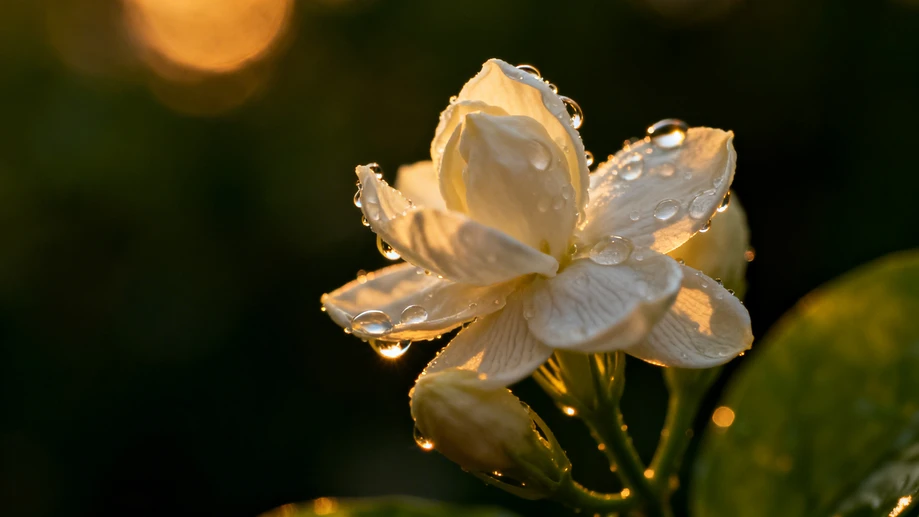
The Sweet Secret Behind Jasmine's Nighttime Fragrance Explosion!
Unlocking the science behind why your favorite white blossoms release their intoxicating scent only after sunset
Picture this: you’re enjoying a warm summer evening on your patio when suddenly, the air fills with an intoxicating sweetness. That magical moment when jasmine flowers decide to release their signature perfume into the night. But why do these delicate white blossoms save their grand aromatic performance for after dark? The answer lies in a clever evolutionary strategy that’s as practical as it is romantic.
Jasmine’s nighttime fragrance isn’t just poetic coincidence—it’s survival science. These flowers evolved to bloom and release scent primarily when their key pollinators are most active. Moths, those nocturnal navigators of the night, rely heavily on scent rather than sight to locate nectar sources. By concentrating their fragrance production during evening hours, jasmine plants essentially roll out the welcome mat specifically for these winged visitors. Their white petals act like tiny reflectors in moonlight, creating visual landing strips to guide moths straight to the prize.
The chemistry behind this timed release is fascinating. Jasmine flowers contain special cells that produce aromatic compounds like benzyl acetate and linalool. During daytime, these compounds remain locked away in tiny oil sacs within the petals. As temperatures drop and humidity rises at dusk, the petals undergo subtle structural changes. Microscopic pores on the flower’s surface open wider, allowing the volatile oils to evaporate more efficiently into the cool night air. This temperature-triggered mechanism ensures maximum scent dispersion when pollinators are searching.
Gardening enthusiasts have observed another clever aspect: the fragrance intensity peaks around 2-3 hours after sunset and gradually fades toward dawn. This matches perfectly with moths’ foraging patterns. If you’ve ever cut jasmine stems for a vase, you’ve probably noticed they’ll perfumed your room all night but go virtually scentless by morning. Next time you catch that heavenly evening aroma drifting through your garden, remember you’re witnessing an ancient conversation between flower and pollinator—a dialogue written in chemistry and timed by the setting sun.
Beyond the science, there’s cultural magic in this nightly ritual. Perfume makers historically timed their jasmine harvests for midnight when oil concentration peaks. In moonlit gardens from Bali to Athens, people have celebrated this transient fragrance for centuries. Tonight, step outside just after sunset. Breathe deeply near a jasmine vine. That sudden wave of perfume? That’s millions of years of evolutionary brilliance packed into one unforgettable sensory moment—nature’s perfect nightcap.