
Have You Ever Wondered Why Mimosa Leaves Close When You Touch Them?
Uncover the surprising science behind this sensitive plant's quick reactions and how it mimics shyness in nature.
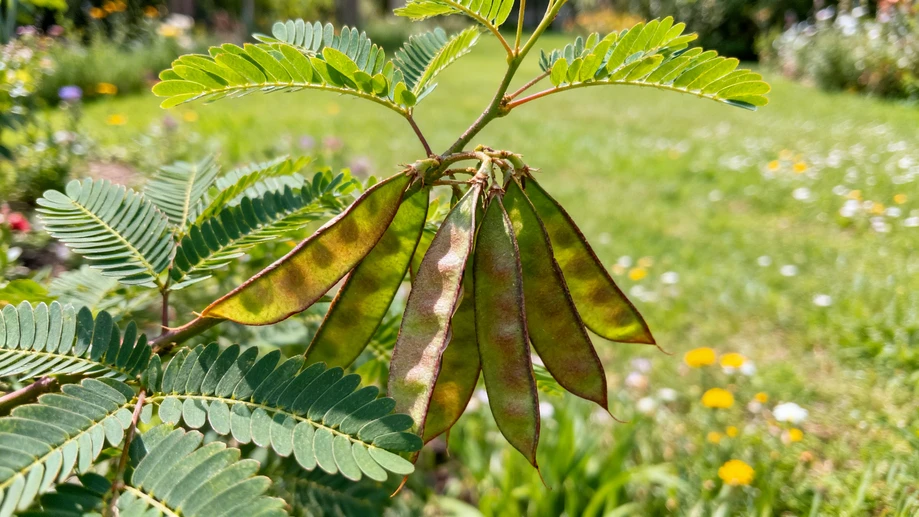
Imagine strolling through a sunny garden on a warm afternoon, your fingers brushing against a cluster of delicate mimosa leaves. Instantly, they fold inward like tiny green hands clenching shut, as if the plant is recoiling from your touch. This isn't magic—it's a real-world marvel that turns any casual encounter into a moment of wonder. Mimosa pudica, commonly known as the sensitive plant, thrives in tropical and subtropical regions, often found in backyards or public parks where its feathery foliage adds a touch of whimsy. For many nature enthusiasts, this quick response sparks curiosity: how does a simple plant pull off such a rapid transformation? It's a perfect example of how everyday interactions with flora can reveal hidden biological secrets, making science feel alive and accessible right in our own green spaces.
Delving deeper, the secret lies in the plant's unique cellular structure. Each mimosa leaf is composed of numerous small leaflets attached to a central stem, and at the base of these leaflets, specialized cells called pulvini act as miniature hinges. When you touch the leaves, even lightly, it triggers a rapid loss of water from these cells. This dehydration causes the pulvini to collapse, pulling the leaflets together in a matter of seconds. Think of it like deflating a tiny balloon—the sudden shift in turgor pressure creates that dramatic folding effect. This mechanism isn't just fast; it's incredibly energy-efficient, relying on ion channels and water movement rather than complex muscles. Yet, this simplicity belies its sophistication, as the plant conserves resources while responding to potential threats. In essence, what seems like shyness is actually a finely tuned survival tactic, turning a gentle prod into a biological ballet.
But why would a plant evolve such a dramatic defense? In the wild, mimosa faces constant challenges from herbivores like insects or grazing animals. By closing its leaves swiftly, it reduces its appeal as a meal—folded foliage appears less appetizing and harder to consume. This adaptation has proven so effective that mimosa can thrive in diverse environments, from open fields to disturbed urban areas. However, this isn't just about avoiding predators; the response also minimizes water loss during windy or dry conditions. Over time, natural selection favored plants with this trait, allowing mimosa to spread across continents. Today, observing this in your local garden connects you to millennia of evolutionary history. It's a reminder that even the smallest actions in nature are shaped by relentless pressures, turning a fleeting touch into a story of resilience and adaptation.
Beyond its biological roots, the mimosa's behavior offers practical insights for modern life. Gardeners often cultivate these plants as educational tools, using them to teach children about plant sensitivity and environmental responses. In a classroom setting, a simple experiment—tapping the leaves—can spark discussions on biology without needing fancy equipment. Similarly, in home gardens, mimosa serves as a natural pest deterrent, its closing leaves signaling when insects are nearby. This real-world application makes science tangible, bridging the gap between textbook theories and hands-on discovery. Moreover, the plant's ability to recover fully after each episode highlights nature's resilience, inspiring a sense of awe in daily routines. Yet, it's crucial to handle mimosa gently; excessive touching can stress the plant, reminding us to respect living organisms in our explorations.
Ultimately, the mimosa's leaf-closing trick is more than a quirky party trick—it's a testament to the intricate dance between life and environment. Next time you spot one in a park or your own yard, take a moment to appreciate this silent conversation. By understanding how such mechanisms work, we deepen our connection to the natural world, finding joy in the small wonders that unfold right under our fingertips.