
Have You Ever Noticed Orchids Hide A Tiny Evolution Trick No Other Common Houseplant Can Possibly Pull Off?
This little-known orchid shape feature serves far more functions than just looking pretty, and it has shaped the whole survival strategy of the entire orchid family for millions of years.
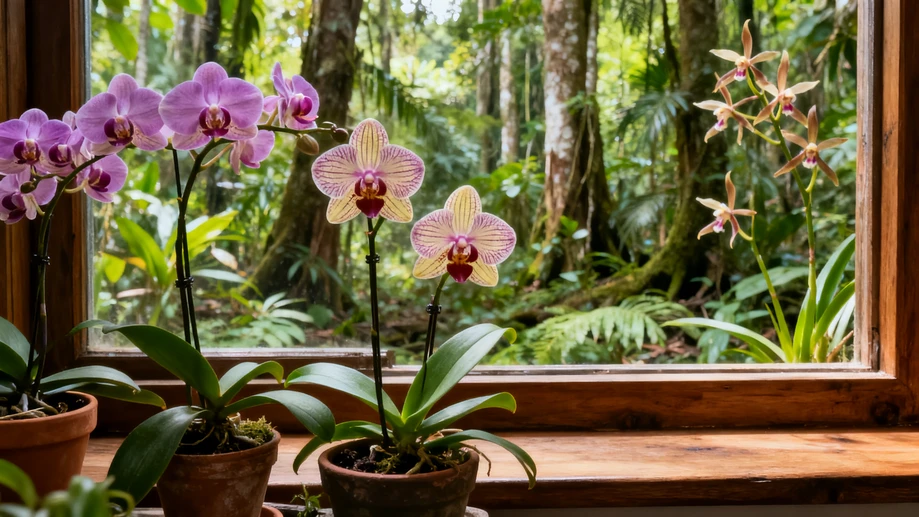
When you walk through the seasonal farmers’ market on a mild weekend, you will likely spot rows of potted moth orchids lined up beside bunches of sunflowers, daisies and roses. Most people grab a potted orchid for its soft pastel petals that last for months without much care, and few of them pause to notice one tiny, extremely unique detail hidden in every bloom. Unlike nearly all other common flowering plants that grow symmetrically with evenly spread petals to welcome pollinators, every orchid bloom has one distinct, oddly shaped lower petal that sticks out far more than the other four, which is called the labellum by botanists. Most casual plant lovers mistake this special petal for no more than a random ornamental detail, never guessing it is the core that keeps the whole orchid family surviving and thriving across the globe.
The labellum is never an accidental trivial growth, after 120 million years of evolutionary selection, this single modified petal has developed countless tiny, super precise structures tailored for specific survival needs. For wild orchids that grow on tree canopies or hidden in understory bushes, the labellum does not just act as a small landing platform for flying insects to rest on when they climb into the flower core. Many orchid species have evolved labellums that perfectly mimic the shape, texture, even the fuzzy body hair of female solitary bees native to their local habitat, some of them even secrete trace chemical scents that are exactly the same as the mating pheromones released by those female bees. Male bees will land on the realistic fake female labellum to attempt mating, and pick up heavy loads of orchid pollen on their backs in the process, before flying off to the next bloom that tricks them the exact same way.
This unique shape adaptation gives orchids an enormous survival advantage that most other flowering plants can never match. A regular wild flower has to produce large quantities of sweet nectar every day, and releases a huge amount of pollen, to make sure a tiny fraction of the pollen can accidentally stick to a random passing bee and reach the stigma of another flower of the same species. Orchids, with their highly targeted labellum design, do not need to waste resources on extra nectar, and every single pollen grain is carried purposefully by a fooled pollinator straight to the exact right spot of another orchid of the same species. Field observation data from tropical rainforest research shows that the pollination success rate of wild orchids is nearly three times higher than that of other flowering plant species that share the same living space. This efficiency saves the orchid family massive amounts of limited energy that would otherwise be wasted on unused pollen and uneaten nectar.
Even the domesticated orchids we keep on our kitchen windowsills, which no longer need to attract wild bees to complete pollination, still retain this special labellum structure that has survived for tens of millions of years, and it has quietly helped us make these plants far easier to keep alive in ordinary home environments. The small concave groove on the top of the labellum can collect and store tiny drops of rainwater or condensed moisture from the air, so when you forget to water your potted orchid for two or three weeks during a busy work week, the plant can still absorb the extra stored water through tiny root hairs and special pores on the edge of the labellum. Many new plant owners who thought they had zero talent for growing plants are shocked to find their moth orchids still bloom for three or four months in a row, and they never realize this extra hardiness actually comes from that oddly shaped little petal they barely noticed before.
This tiny, overlooked shape feature is the exact reason why orchids have become one of the most diverse flowering plant families on the entire planet. There are currently more than 28,000 documented wild orchid species distributed in every continent except Antarctica, and nearly every single one of them has a labellum shape uniquely adjusted to fit its local pollinator and local microenvironment. Even two very closely related orchid species that grow on the same single tree branch will never accidentally cross pollinate with each other, because their labellum structures only attract their own exclusive pollinator species. It is not an exaggeration to say that this one special petal has supported the entire huge, varied orchid family to survive and thrive across the entire world for tens of millions of years, and it is still quietly showing its hidden power in the potted orchid you bring home from the market.