
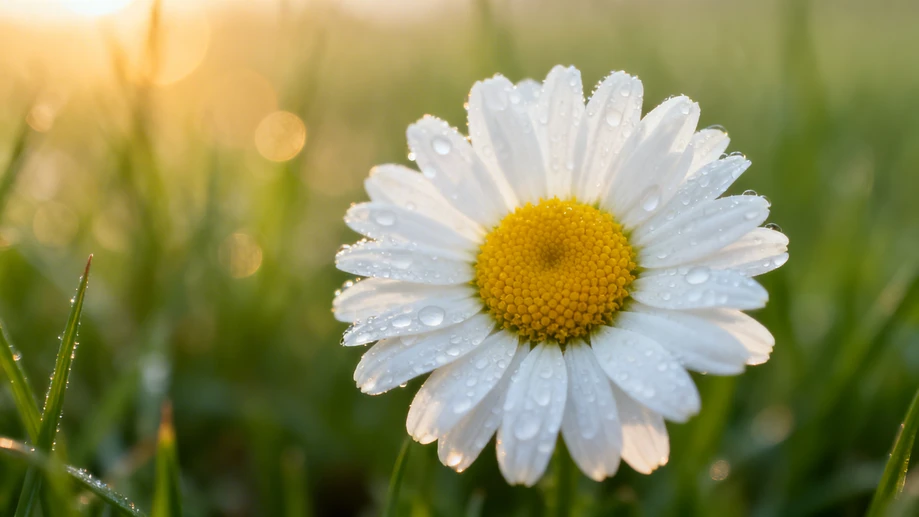
Daisies Hold Ancient Secrets of Love and Fortune Hidden in Their Petals
Discover the surprising folklore tradition that turned these cheerful blooms into nature's own crystal ball for romance seekers.
Picture a sun-drenched meadow dotted with cheerful white and yellow daisies. You've likely plucked one yourself, idly pulling off petals while whispering "he loves me, he loves me not." This simple childhood ritual feels like innocent fun, a whimsical way to pass time surrounded by nature's charm. But beneath this playful act lies a fascinating thread connecting us to centuries of human belief and botanical wonder.
This seemingly modern game isn't a recent invention at all. Its roots stretch back deep into European folklore, where the humble daisy, or *Bellis perennis*, was revered as more than just a pretty wildflower. Ancient Celts observed the daisy's remarkable behavior – its habit of closing its petals at dusk and reopening them with the morning sun. This daily rhythm led them to associate the flower with solar deities and cycles of rebirth. They saw in the daisy a natural oracle, a small piece of the divine growing right beneath their feet, perfectly positioned to reveal hidden truths about love and destiny.
By the Middle Ages, the practice of using daisies for divination, particularly concerning matters of the heart, had become widespread. Young women, often with limited agency in choosing their partners, would venture into fields at dawn, when dew still clung to the grass. They believed the first daisy they found with its petals fully open held special power. Carefully plucking it, they would begin the rhythmic chant, assigning each plucked petal to an alternating fate. The final petal revealed the supposed answer whispered by the flower itself. It was more than a game; it was a tangible connection to hope and the mysterious forces governing affection.
Why the daisy, though? Its structure made it uniquely suited for this role. Unlike many other common flowers, the classic daisy flower head isn't a single bloom but a composite structure called a capitulum. The central yellow disc is packed with tiny fertile florets, while the surrounding white "petals" are actually sterile ray florets. This abundance of easily pluckable ray florets provided the perfect, countable elements needed for the ritual. Its commonness ensured it was readily available almost everywhere, from castle gardens to peasant fields, making it the people's flower of prophecy.
This tradition endured remarkably well, traveling across continents with settlers. While the mystical belief in its prophetic power faded with scientific understanding, the core ritual remained. The physical act – the tactile sensation of plucking each soft petal, the rhythmic chant, the suspense building with each removal – retained its emotional resonance. It transformed from a serious divination practice into a universal gesture of romantic curiosity, a shared language of hope and playful uncertainty passed down through generations.
Today, when you find yourself absentmindedly picking the petals from a daisy, you're participating in a living fragment of botanical history. You're reenacting a ritual born from ancient observations of nature's cycles and a deep-seated human desire to glimpse the future, especially in love. That simple flower, often dismissed as a common weed, carries within its delicate white rays a centuries-old echo of human longing, belief, and our enduring fascination with the secrets nature might hold. It’s a testament to how deeply intertwined wildflowers are with our cultural stories and emotional landscapes.