
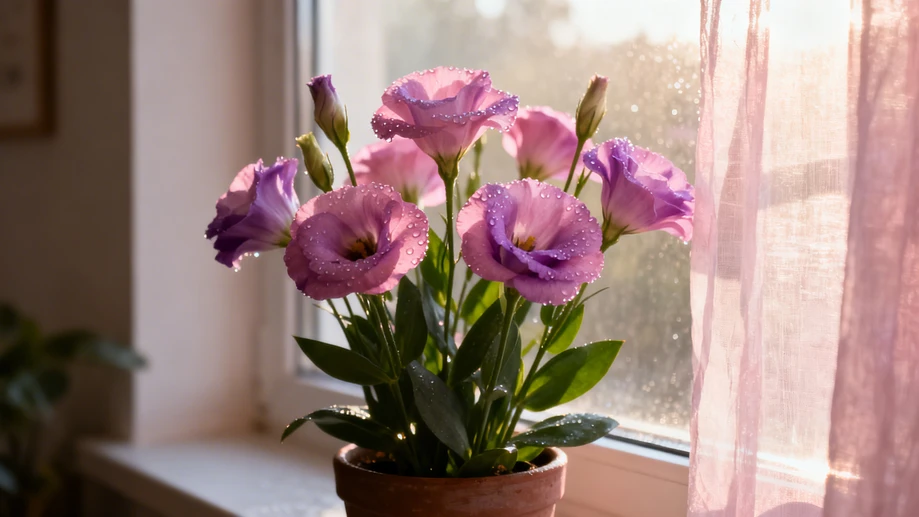
Are You Secretly Killing Your Lisianthus with Too Much Sunlight?
Uncover the surprising light preference of this delicate bloom that defies common gardening logic
Picture this: you proudly place your newly purchased lisianthus on the sunniest windowsill, expecting it to thrive like a sunflower. Weeks later, those vibrant petals start curling at the edges like burnt paper, and you're left wondering where you went wrong. This scenario plays out in countless homes where well-intentioned plant lovers unknowingly torture their lisianthus with excessive light. Contrary to popular belief, these elegant flowers aren't sun worshippers at all.
Most flowering plants come with straightforward instructions: more sunlight equals more blooms. But lisianthus operates by different rules. Native to warm grasslands and riverbeds of northern Mexico, these plants evolved to flourish under the protective shade of taller vegetation. Their delicate petals contain less protective wax than sun-loving species, making them vulnerable to UV damage. When exposed to direct afternoon sun, the leaves develop telltale scorch marks resembling bleach stains while buds may refuse to open entirely.
Here's where the magic happens: shifting your lisianthus to bright indirect light transforms its behavior dramatically. Place it near an east-facing window where it receives gentle morning rays, or behind a sheer curtain filtering harsh afternoon beams. Within days, you'll notice the plant relaxing its posture. Leaves that once curled defensively now spread wide like open hands, while existing blooms gain longevity. New buds emerge with confidence rather than shriveling in protest, revealing the famous rose-like layers that make lisianthus a florist favorite.
Temperature plays a crucial supporting role in this light ballet. These flowers thrive in cooler environments than most realize, preferring 15-21°C (60-70°F) – similar to human comfort zones. Pairing indirect sunlight with moderate temperatures mimics their natural habitat conditions. At night, they appreciate a slight temperature drop, which explains why lisianthus often performs better on covered patios than in stuffy living rooms. This combination prevents moisture stress, allowing roots to efficiently deliver nutrients to those intricate blooms.
The ultimate reward comes with patient observation. Properly positioned lisianthus develops stronger stems that don't require staking and deeper colored foliage that photosynthesizes efficiently. Each flower lasts significantly longer in arrangements, sometimes persisting for two weeks as cut stems. You'll discover the plant directs energy toward continuous blooming rather than damage repair. This simple adjustment prevents the heartbreaking cycle of replacing sun-damaged plants every season, letting you enjoy the ruffled blossoms from spring through fall without interruption.
Understanding light requirements reveals why lisianthus outperforms roses in vase life and rivals orchids in elegance when given appropriate conditions. Their reputation for being "difficult" stems largely from this single widespread misunderstanding. Once you crack the lighting code, these floral gems become unexpectedly low-maintenance companions, offering months of sophisticated beauty that belies their delicate appearance. The true secret lies not in what you add to their care routine, but in what harsh element you thoughtfully remove.