
Wait, Have You Ever Noticed That Sweet Osmanthus Flowers Hold Far More Unexpected Uses Than Just Diffusing Warm Scent In Autumn Breeze
We uncover the little-known underrated traits of sweet osmanthus that hide in plain sight across temperate green spaces, roadside belts and old courtyard landscapes across many regions.
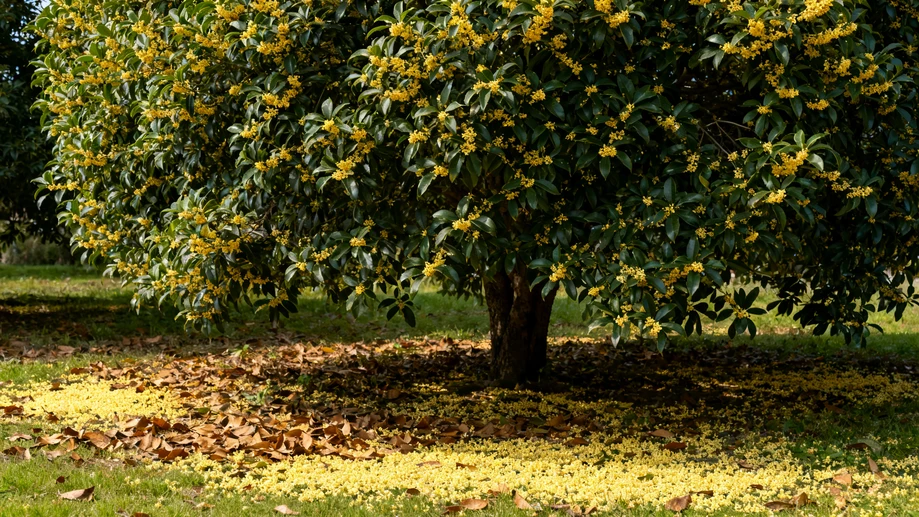
When the first cool wave rolls in after the last leftover summer heat fades, the first soft sweet scent drifting in the air rarely comes from any big, eye-catching ornamental flower that blooms in full display. The source of this subtle, honeyed aroma usually hides deep behind layers of dark green, leathery glossy leaves. Each individual sweet osmanthus flower is no bigger than 1 centimeter in diameter, with dozens of tiny blooms clustered tightly together at the joint of petiole and woody branch. There are no broad, stretching petals to show off bright color or draw attention from a far distance, and all the aromatic molecules leak out slowly from the thin gaps of the tiny petal structure, drifting with the moving autumn wind to areas dozens of meters away.
Most native varieties of sweet osmanthus own a special biological structure that very few other common landscape flower species can match. The cell walls of their thin petals contain a high proportion of natural plant wax and extremely stable aromatic oil that will not break down even after the whole flower dries out completely and loses all its water content. Unlike other fragrant flower petals that turn tasteless and colorless within 72 hours after falling off the branch, dried sweet osmanthus petals can retain its signature sweet, floral aroma for up to three years under natural dry storage conditions. A large number of mature sweet osmanthus petals that drop naturally to the ground and mix with dry grass and fallen leaves do not lose their scent quickly, and they will release aromatic molecules slowly for months to neutralize the dull, stale smell generated by damp half-decomposed leaves on the ground, forming a large invisible natural aroma layer on the surface of the soil.
This unique retention trait also makes sweet osmanthus one of the most low-maintenance landscape plants that local urban greening systems prefer in regions with mild winter temperatures. Mature sweet osmanthus trees need no frequent shaping pruning, no extra high-nutrient fertilizer input and no special temperature protection to complete its full annual growth cycle. After the two-week bloom period ends, the fallen petals do not require specialized manual cleaning teams to collect and dispose of. During the slow degradation process, the remaining aromatic molecules on the petals can effectively reduce the spawning rate of common underground pests in the topsoil, and the decomposed plant residues add trace amounts of aromatic organic matter to the soil to improve the air permeability of the land. Large connected sweet osmanthus groves with hundreds of mature trees can form a self-sustaining small ecosystem that requires zero artificial chemical pesticide intervention.
Unlike most fragrant flower species that only release scent quickly when hit by strong direct sunlight, sweet osmanthus can diffuse its soft, non-irritating sweet aroma even on overcast cool days with ambient temperature lower than 15 degrees Celsius. After a light autumn rain, the moist cool air dilutes the aromatic molecules evenly across the open area, making the scent feel softer and more comfortable rather than sharp and overwhelming like synthetic air fresheners. Wild pollinators including wild bees and butterflies will deliberately detour past other plant patches that have already finished their autumn bloom, and fly straight towards the sweet osmanthus branches. The trace nectar hidden at the base of each tiny osmanthus petal has 15 percent higher sugar content than most other late autumn flower species, offering sufficient energy reserve support for pollinators that are preparing for the upcoming cold winter months.
The full annual growth cycle of sweet osmanthus follows a completely low-profile rhythm that fits perfectly with its hidden, gentle traits. It does not compete for limited space and attention with all the vibrant spring blooming flowers in warm seasons. It never grows huge, bright-colored corolla to chase for attention from the surrounding environment. It only blooms quietly at the exact time when nearly all other summer and early autumn flower varieties have finished their blooming period, leaving a soft, long-lasting honeyed mark in the cool autumn air that no other plant can replicate for a whole season.