
Have You Ever Noticed That Wild Orchids Use Their Unique Flower Shapes To Trick Unsuspecting Pollinators So Effortlessly
This little known fun fact breaks down the exact evolutionary tricks hidden in common wild orchid shapes that almost no casual plant lover ever gets to observe up close in daily outdoor visits
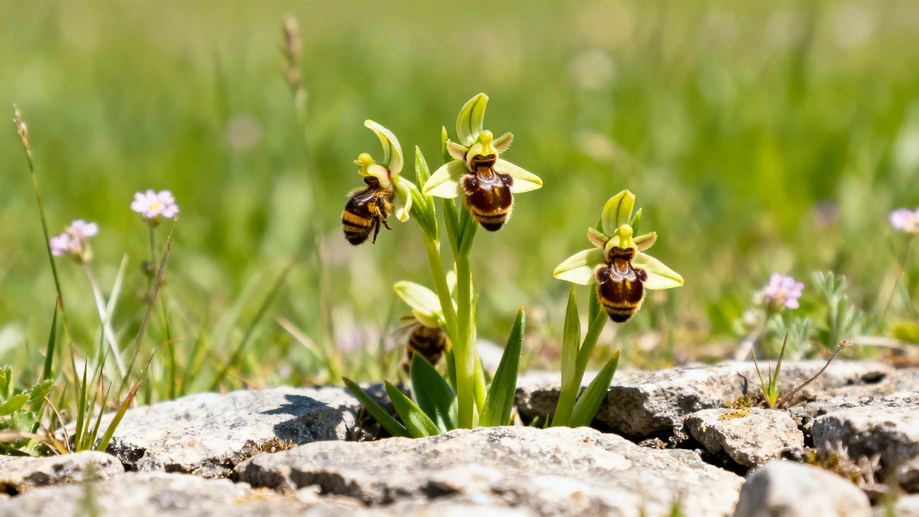
When you slow down to scan the low vegetation of sunlit meadows, rocky mediterranean hillsides or even shaded patches of forest edge in temperate regions, you may catch a tiny bloom that at first glance looks exactly like a fuzzy female bee resting on a thin stem. This is not a random coincidence, but one of the most clever shape adaptation tricks that wild orchids have polished over millions of years of evolution. The edges of the main lower petal curl outward just enough to replicate the soft folded lines of a bee’s translucent wings, tiny dark spots are dotted at exact positions that match the compound eye markings on a real bee’s head, and even the faint fine fuzz covering the surface of the petal feels nearly identical to the chitin hair on a real insect’s exoskeleton for any small flying creature that comes within close range.
Unlike most flowering plants that produce sweet nectar to reward visiting pollinators for carrying their pollen, this group of wild orchids invest almost all of their limited growth energy into refining their flower shape, rather than making sugary nectar as payment. When male bees emerge from underground nests a few days earlier than the females that will soon hatch, they spot the orchid bloom from dozens of meters away, mistake it for a potential mate, and land directly on the petal to attempt mating. In the process, their back or head brushes directly against the sticky pollen sacs fixed to the top of the flower’s center, and these pollen sacs stick firmly to the insect’s body before it realizes there is no actual insect partner waiting for it on the bloom.
Many plant enthusiasts incorrectly assume this level of precise shape mimicry only exists in rare tropical orchid species hidden deep in remote rainforests, but dozens of these shape specialized orchid species grow in very accessible, commonly visited natural areas across most temperate regions. Some smaller orchid species that grow attached to damp tree bark in city park green belts evolve petal shapes that perfectly replicate the silhouette of a tiny aphid colony, attracting species of wasps that hunt aphids as food for their larvae. When the wasp moves across the fake aphid shapes looking for prey, it picks up and drops off orchid pollen without receiving any prey to eat at the end of its visit.
Every tiny detail of these specialized orchid shapes serves a very specific purpose, with zero unnecessary or random design elements. Researchers have observed that if a single dark marking on the petal’s “head” area is damaged by wind or light hail, the bloom’s chance of successfully attracting a pollinator drops by more than 70 percent. Even the exact angle that the fake insect shape tilts away from the stem is calibrated to match the typical angle that a real resting female bee holds its body at, so that flying male bees can recognize the silhouette from high up in the air when they are patrolling the area looking for mates. No other group of flowering plants has been documented to reach this level of extreme, detail focused precision in shape adaptation for pollination purposes.
It is easy for most people to only associate orchids with the large, brightly colored potted varieties sold in commercial flower shops, and overlook these tiny, unassuming wild relatives that hide their most impressive evolutionary secrets entirely in the fine details of their shape. This highly efficient survival strategy has allowed orchid species to spread to almost every non-arid, non-freezing habitat on every continent, making them one of the largest and most diverse flowering plant families on the entire planet. Even on a short casual walk through a local wild reserve, a close look at small unmarked blooms growing close to the soil will often reveal these incredible, nearly hidden shape tricks that nature has spent endless generations perfecting.