
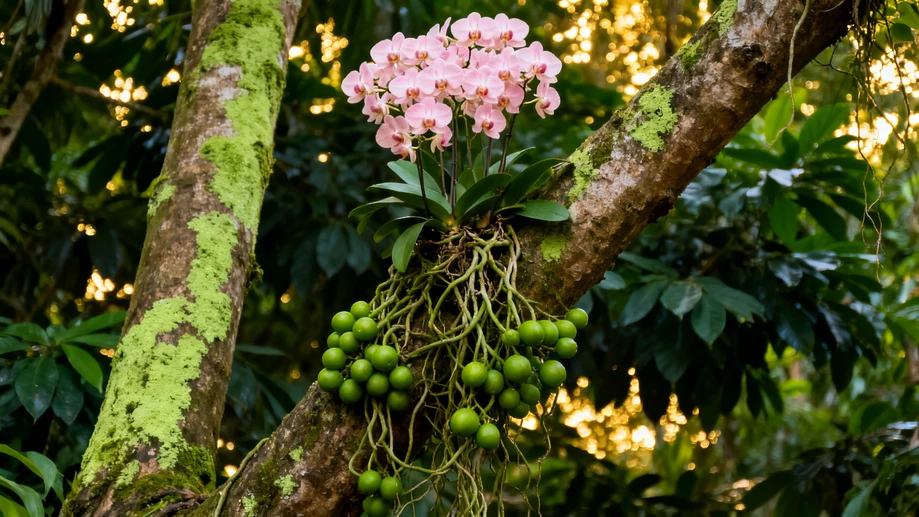
Why Most Wild Orchids Never Even Come Into Contact With Ordinary Dirt To Grow And Bloom Perfectly
This little-known survival trick of wild orchids breaks all common assumptions people hold about how flowering plants take root and absorb nutrients from their surrounding environment
The regular scene most people encounter when they pick up a potted orchid from a local grocery store or market stall shows the plant nestled inside a plastic pot filled with dark, rich potting soil, its short green stems sitting firmly in the growing medium just like any other common houseplant. This frequent sight has led millions of plant lovers to form a universal assumption: all orchids are terrestrial plants that need to anchor their roots in soil to get all the water and nutrients they need to stay alive. The truth that very few people know is that this potted setup is completely artificial for most orchid species, and wild counterparts of nearly 90 percent of all orchid varieties on the planet never touch a single grain of ordinary dirt for their entire lifespan.
Most wild orchids that grow in tropical and subtropical climate zones are categorized as epiphytes, which means they spend their whole lives anchored to the rough bark of tall tree branches, sunken gaps on moss-covered rock faces, or even the thick layer of accumulated leaf litter that gets stuck on high tree forks dozens of meters above the forest ground. Their roots do not need to burrow down into soil to find water reserves, as the outermost layer of each orchid root is wrapped in a thick, spongy membrane called velamen, a specialized tissue that can absorb and hold up to dozens of times its own weight in moisture the moment rain drips down from the canopy above. This velamen layer also prevents the water stored inside the root from evaporating too fast during the long stretches of dry, sunny days that are common at the top of forest canopies.
There is no shortage of other small adaptive details that help these soilless orchids thrive in their elevated living spaces. The microscopic seeds of wild orchids are so tiny that they carry no built-in nutrient reserves to support initial sprouting, so they form mutually beneficial symbiotic relationships with specific strains of tiny fungi that grow on damp bark surfaces. These fungi break down the tiny bits of decomposing leaves, bird droppings, and organic debris that get trapped in the crevices of their host bark, turning those hard-to-absorb materials into soluble nutrients that the young orchid seedling can take in easily. Unlike plants that grow on the dark, damp forest floor, orchids that perch on high branches get steady access to soft, dappled sunlight that filters through upper leaves, constant fresh air flow that prevents fungal rot from building up on their tender tissues, and far fewer crawling herbivores that would chew through their soft new growth.
This lesser-known growth habit also explains why so many new orchid owners struggle to keep their plants alive for longer than a few months after they bring them home. Most traditional houseplant growing guides tell people to repot new plants into loam-rich soil, but that exact practice smothers the delicate, air-dependent orchid roots, and traps excess moisture around the root surface that triggers fast and irreversible root rot. Once hobbyists learn to abandon the idea of planting orchids in dense potting soil, and instead grow them in loose, chunky mixes of pine bark, volcanic rock chips, and dried sphagnum moss that lets air flow freely around every part of the root system, their orchids will often produce new leaves and even bloom on a reliable annual schedule for years on end. Some experienced orchid enthusiasts even grow their small specimens on plain chunks of rough wood with no growing medium at all, spritzing the exposed roots with water once every few days to replicate the exact conditions these plants evolved to thrive in.
The unusual soilless growth strategy of wild orchids is not just a random oddity in the plant world, it is the product of tens of millions of years of gradual evolutionary adaptation that let orchids carve out an entirely unique ecological niche no other large group of flowering plants could claim. Instead of wasting energy competing with thousands of other ground-rooted plants for the limited patches of nutrient-rich topsoil scattered across the forest floor, orchids took to the open, unused real estate high up on tree trunks and branches, a space that comes with far more benefits than drawbacks. This clever adaptation is one of the core reasons why there are more than 28,000 documented wild orchid species spread across every continent except Antarctica, with new varieties still being discovered in remote forest regions every single year.