
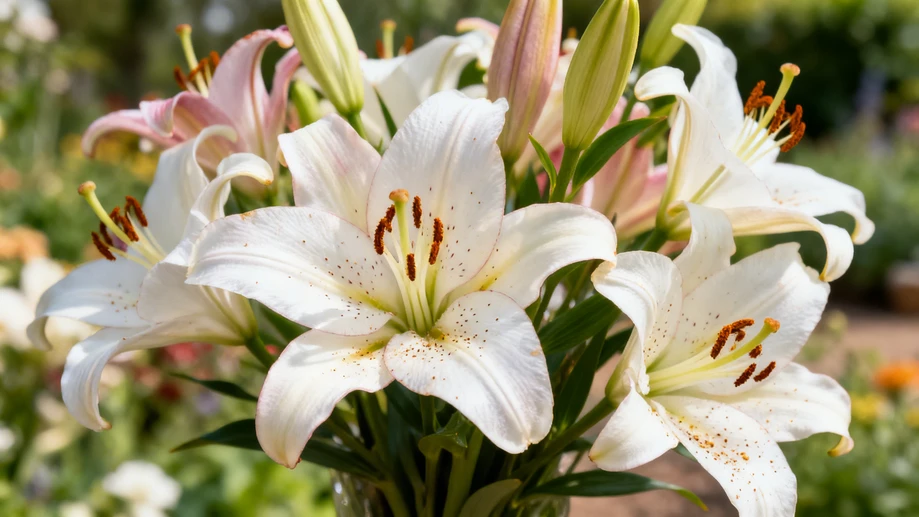
Why Lilies Symbolize Renewal Across Civilizations
Discover how this delicate bloom carries profound meanings of rebirth from ancient tombs to modern celebrations
Picture walking through a vibrant flower market where towering white lilies demand attention with their trumpet-shaped blooms and intoxicating scent. These aren't just pretty decorations – they're botanical time capsules carrying messages from ancient empires. For over 3,000 years, civilizations worldwide have imbued lilies with symbolic power, transforming them into living metaphors for life's cyclical nature.
Ancient Egyptians placed Madonna lilies in pharaohs' tombs as resurrection emblems, believing the pure white petals represented the soul's return to divine light. This tradition revealed their deep understanding of the flower's lifecycle; bulbs lying dormant underground through harsh seasons before erupting into glorious bloom mirrored their beliefs about eternal life. Similarly, Greek mythology linked lilies to Hera's milk, establishing them as symbols of rebirth and nourishment. This universal language of flowers persisted across continents when Christian artists adopted the lily to represent Mary's purity and Christ's resurrection.
Fast forward to modern springtime rituals where lilies dominate Easter celebrations. Churches overflow with fragrant white varieties precisely because they echo themes of renewal central to the season. The floral industry strategically times lily harvests to coincide with this period when demand peaks, creating an annual cycle where millions of blooms symbolize hope's resurgence. Not coincidentally, funeral homes also embrace lilies as the top requested flower, offering visual poetry about life transcending death.
Beyond religious contexts, lilies convey emotional renewal during personal milestones. Hospital gift shops consistently report lilies among their bestsellers for patients recovering from surgery. The emergence of new hybrids like the 'Stargazer' – with its vibrant pink rebirth from duller ancestors – literally mirrors humanity's enduring fascination with transformation. Professional florists confirm this symbolism translates into tangible gestures; weddings featuring calla lilies symbolize fresh beginnings while anniversary bouquets containing golden varieties reflect renewed commitment.
What makes this symbolism particularly compelling is its botanical foundation. Lilies grow from bulbs that require a cold dormant period before flowering – a natural metaphor for overcoming darkness. Contemporary psychology studies suggest that surrounding recovery spaces with lilies subconsciously triggers associations with healing, confirming what ancient cultures intuited. Whether placed on an altar or a windowsill, lilies continue their centuries-old work: whispering promises of renewal through every unfurling petal.