
The Calla Lily's Secret: How Its Elegant Shape Hides a Survival Masterpiece
Discover the fascinating evolutionary trick behind this flower's iconic silhouette that helps it thrive in challenging environments
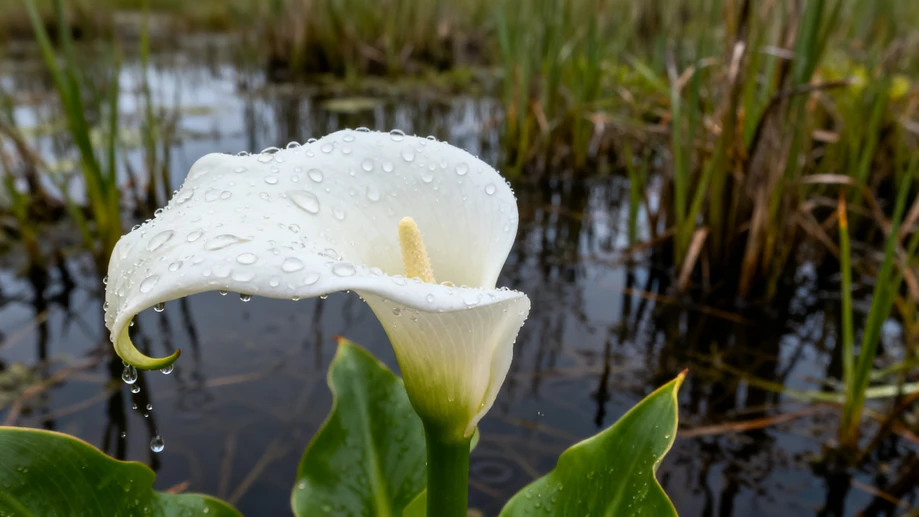
At first glance, the calla lily captivates with its sculptural simplicity – that smooth, curving spathe cradling a golden spike. But this elegant design isn't just for show. That trumpet-like form serves as a sophisticated survival tool, perfectly adapted to its wetland habitats. When heavy rains pound its native South African marshes, the curved spathe acts like a natural umbrella, directing water away from the precious pollen-bearing spadix inside. This clever architecture prevents the flower from drowning during sudden downpours, ensuring its reproductive parts stay dry and functional.
Beyond weather protection, the calla's shape creates a microclimate that attracts specific pollinators. The funnel formation traps warmth and humidity, releasing concentrated floral scents that travel farther in damp air. This scent trail becomes irresistible to beetles and flies navigating the marshes at dusk. As insects enter the sheltered chamber, they brush against pollen while seeking warmth, then carry it to neighboring flowers. The curved walls even guide their exit path, maximizing pollination efficiency with mathematical precision.
Interestingly, what appears to be a petal is actually a specialized leaf called a spathe, while the central yellow structure houses hundreds of tiny flowers. This evolutionary innovation allows the plant to conserve energy. Instead of producing numerous petals, it invests resources in a single striking bract that serves multiple functions: protection, pollinator attraction, and visual signaling. The color contrast between the white spathe and yellow spadix creates a natural landing strip visible to insects through fog and rain.
Modern gardeners unknowingly benefit from these adaptations. When we plant callas in rain-prone areas, their built-in drainage system prevents rot that afflicts other flowers. The waxy coating on the spathe – another survival feature – makes them remarkably resilient as cut flowers, maintaining freshness for weeks. This durability explains why callas frequently appear in bouquets during rainy spring weddings, standing pristine while other blooms wilt.
Next time you admire a calla lily's graceful curve, remember it's not merely decorative. That elegant sweep represents millions of years of evolutionary problem-solving – a natural masterpiece where form follows function in the most beautiful way. From African marshes to your backyard, this flower's iconic shape remains nature's perfect answer to environmental challenges.