
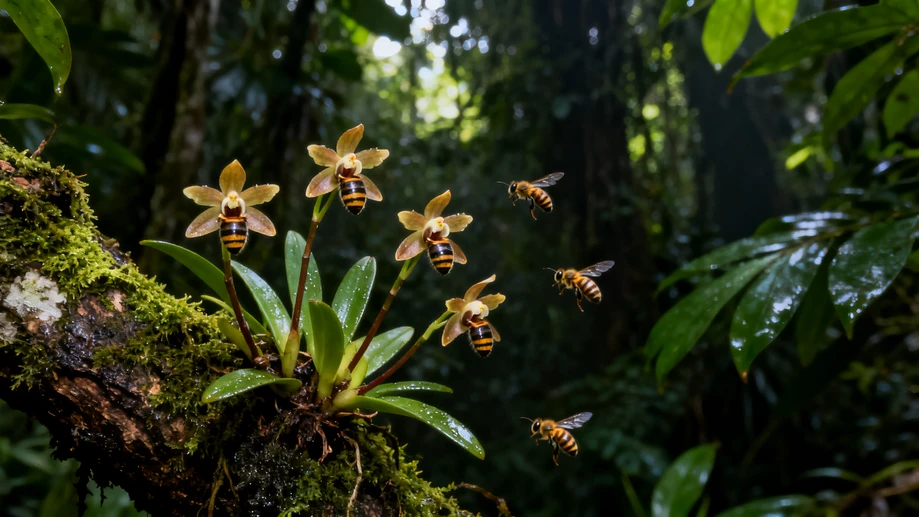
Did you know wild orchids have evolved some of the most unbelievable shape tricks to survive in harsh wild habitats
We break down the little-known physical traits of common wild orchid species that let them trick pollinators easily without expending extra energy to make sweet nectar
Most people who stop to admire potted orchids at plant shops or walk through orchid exhibits at local botanical gardens assume all bright, colorful orchid blooms produce sweet, sugary nectar to reward the bees, beetles and flies that carry their pollen from plant to plant. This common assumption could not be further from the truth for the vast majority of wild orchid species that grow across every continent except Antarctica. Unlike rose bushes or sunflowers that invest large portions of their stored energy into making nectar as a reliable payment for pollinator visits, more than 60 percent of wild orchids put all of their limited biological resources into fine-tuning the exact shape, texture and color pattern of their petals to pull off elaborate ruses that fool pollinators into doing all the work for them. This unusual adaptation is one of the core reasons orchids have become one of the largest and most diverse plant families on the entire planet, with more than 28,000 confirmed distinct species found in wildly different climate zones.
The most famous example of this shape-based trickery can be seen on the petals of wild European bee orchids, whose lower lip petal has evolved to match the exact shape, fuzzy texture, body segment markings and even the matte sheen of a newly emerged female solitary bee resting on a small patch of foliage. What most casual observers miss at first glance is how perfect the mimicry is down to the tiniest detail: the petal even has small, translucent spots that mimic the tiny reflective glints of a female bee’s compound eyes in direct sunlight. Male solitary bees that hatch weeks before any female bees emerge from their underground nests will spot these orchid petals from mid-flight, veer off their regular foraging path, and land directly on the bloom trying to mate, picking up sticky pollen packets on their back in the process. When the same confused male bee flies off a few seconds later and lands on a second nearby bee orchid, it will deposit the pollen packet directly onto the proper reproductive structure of the new flower, completing pollination without the orchid ever expending a single calorie on making nectar.
Other wild orchid species have developed equally impressive shape-based mimicry tailored to the specific preferences of their local pollinators, with some varieties shaping their petals to look almost identical to small rotting chunks of meat or decaying insect corpses. These species, most often found growing on the lower shaded levels of tropical rainforest understories, have dark maroon and brown mottled patterns across their petals, fine hair-like structures that mimic the fuzzy texture of mold growing on rotting material, and even small sunken folds that look exactly like the open wounds on a dead small animal. Local species of carrion flies that normally lay their eggs on fresh rotting meat will drift down to land on these orchids expecting to find a prime spot to lay their eggs, and crawl across the textured surface of the bloom looking for a good place to deposit their young. As they move across the flower, they pick up pollen grains stuck to their legs and bodies, and carry those grains to the next deceptive orchid they land on a few meters away.
This strange evolutionary choice to invest all energy into specialized petal shapes rather than producing nectar makes perfect sense when you consider the harsh growing conditions most wild orchids have adapted to over millions of years. More than 70 percent of all wild orchid species grow as epiphytes, meaning they root themselves on the rough bark of tall rainforest trees instead of in mineral-rich soil on the forest floor. Up on the branches 20 or 30 meters above the ground, they have almost no access to regular deposits of nutrient rich decaying leaf litter, and only get small amounts of water from passing rain showers and morning dew. Every calorie of sugar and nutrient they absorb through their thin tangled roots needs to be used as efficiently as possible, and producing large quantities of nectar would waste far too much of those scarce resources. By evolving petal shapes that perfectly manipulate the instinctual behaviors of their local pollinators, they can achieve much higher pollination success rates than nearby flowering plants that waste huge amounts of energy producing nectar for every random passing insect.
Even many of the common ornamental orchid varieties sold for home cultivation today still carry all of these subtle, specialized shape details that their wild ancestors developed millions of years ago. If you look closely at the lower lip petal of a common phalaenopsis orchid bloom with a magnifying glass, you will spot tiny subtle ridges and color shading patterns that no human breeder ever intentionally added during the process of selective cultivation. These leftover details are the faint traces of the old mimicry tricks their wild relatives used to lure in local pollinators in their original natural habitats. This is also the reason properly cared for home-grown orchids can stay in full bloom for up to three months at a time, as they never have to divert any stored energy into making nectar that would quickly drain their limited nutrient reserves.