
Why Do Lotus Flowers Bloom Pristine in the Muddiest Waters?
The astonishing science behind how lotuses maintain immaculate beauty while thriving in swampy environments
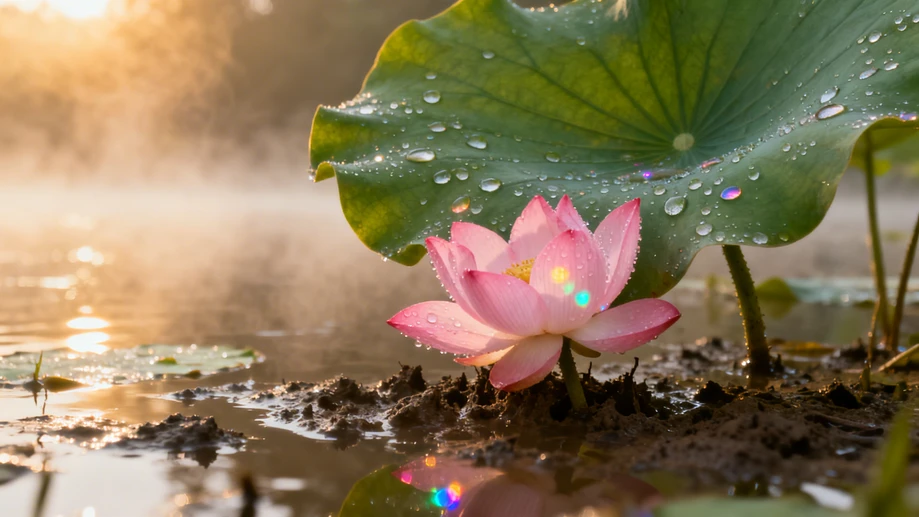
Imagine walking past a murky pond choked with algae and decaying vegetation. Suddenly, your eyes catch a dazzling sight: perfect pink blossoms floating atop the sludge like celestial visitors. This daily miracle puzzles gardeners and scientists alike. How does the lotus emerge spotless from such filthy conditions? The secret lies in nature's microscopic architecture. Each petal is covered in nano-scale waxy bumps that create a self-cleaning surface. When muddy water droplets land on them, they bead up like mercury and roll away, carrying dirt particles with them. This phenomenon, called the "lotus effect," has inspired stain-resistant fabrics and self-cleaning paints.
Observe a lotus leaf after a rainstorm and you'll see nature's engineering marvel in action. Water doesn't just slide off – it dances. The microscopic bumps create air pockets that reduce surface contact, allowing droplets to gather debris as they skitter across the leaf. This isn't just about staying pretty; it's survival strategy. By keeping surfaces clean, the lotus maximizes sunlight absorption for photosynthesis and prevents fungal infections. Modern researchers have mimicked this texture in hospitals to create bacteria-resistant surfaces. Next time you see water beading on a raincoat, thank the lotus.
The flower's relationship with mud goes beyond surface cleaning. Lotus seeds buried in anaerobic sediment can remain dormant for centuries. In fact, botanists successfully germinated 1,300-year-old seeds discovered in an ancient lakebed. This incredible resilience comes from the seed's rock-hard casing and metabolic suspension ability. While other plants would rot, the lotus bides its time until conditions improve. Farmers leverage this trait by storing lotus seeds in river mud during winter, ensuring springtime blooms. This natural preservation system puts human food storage technology to shame.
What truly astonishes is the flower's internal purification system. Lotus roots actively absorb heavy metals from contaminated water while resisting toxin accumulation in their edible parts. Wastewater treatment facilities in Asia now use lotus ponds to filter industrial runoff. The roots bind to pollutants like lead and cadmium, transforming toxic sludge into habitats for fish and dragonflies. This natural filtration occurs while the plant produces oxygen and cools surrounding water – a multitasking marvel that chemical treatment plants struggle to replicate.
Beyond physical properties, the lotus thrives through biological timing. Their flowers maintain precise internal temperatures, opening at dawn and closing at dusk like clockwork. This thermal regulation protects pollen from humidity and attracts specific pollinators. During summer heatwaves, lotuses divert water from roots to petals through capillary action, creating natural evaporative cooling. Urban planners are studying this mechanism for eco-friendly building temperature control. The lotus doesn't fight its swampy home – it masters it through millions of years of muddy evolution.