
The Secret Language of Jasmine: What Does Your Flower Really Say?
Beyond its sweet scent lies a hidden world of meaning, where this delicate bloom whispers tales of love, mourning, and ancient secrets across continents.
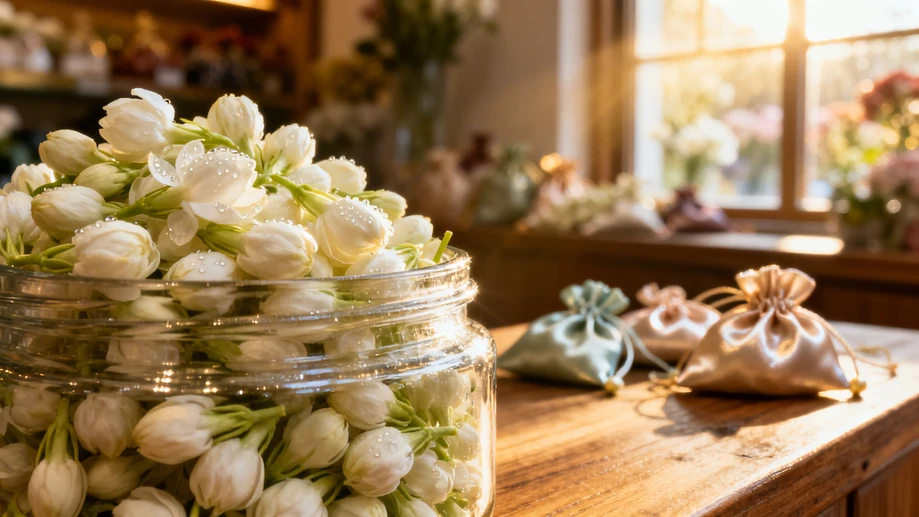
Picture this: you walk into a cozy boutique, drawn by a heady, sweet perfume drifting through the air. Nestled near the cash register are small, intricately embroidered silk pouches. A handwritten sign simply reads "Jasmine Sachets – For Sweet Dreams". You pick one up, the fabric soft, the aroma instantly calming. This little sachet isn't just an air freshener; it's carrying centuries of unspoken messages, woven into its very essence. That intoxicating fragrance is the signature of Jasminum, the humble jasmine flower, but its story extends far deeper than simply smelling nice. Throughout history and across wildly diverse cultures, this unassuming blossom has been a powerful symbol, speaking a silent language understood by hearts and souls.
In many parts of East and Southeast Asia, particularly in countries like China, the Philippines, and Thailand, jasmine is deeply intertwined with love, romance, and marriage. Imagine a bride on her wedding day, her hair intricately braided and adorned not with diamonds, but with fresh strings of tiny, star-like jasmine buds. The pure white flowers symbolize purity, innocence, and everlasting beauty. The act of giving jasmine garlands (or "sampaguita" leis in the Philippines) is a profound gesture of adoration and devotion. Vendors sell them outside churches and temples, a simple yet potent token exchanged between lovers or offered during prayers for blessings on a union. The scent becomes inextricably linked with the tender moments of courtship and the sacred vows of matrimony, a floral promise whispered on the breeze.
Yet, flip the cultural coin, and jasmine reveals a strikingly different, almost opposite, facet of its symbolic nature. Journey to Iran, parts of the Arab world, and even historically in Victorian England, and the same white bloom carried a weight of grief and remembrance. Walk through a traditional funeral procession in some regions, and you might encounter the bittersweet scent of jasmine layered over sorrow. The stark purity of its white petals made it a suitable emblem for mourning and the solemn farewell to a loved one, representing the soul's journey and the fragility of life. It served as a quiet, fragrant tribute placed upon graves or woven into wreaths, its beauty a poignant counterpoint to loss. This duality – signifying both joyous love and profound grief – showcases jasmine’s remarkable cultural adaptability.
The power embedded in jasmine even spilled over into the pages of global history and economics. Think not of grand battleships, but of heavily laden merchant vessels navigating treacherous seas. The intense value placed on jasmine, particularly for producing the precious essential oil known as jasmine attar or jasmine absolute, fueled complex trade routes. The quest for this "liquid gold" of perfumery, requiring thousands of pounds of blossoms for just a tiny vial of oil, made regions like Grasse in France and later, countries with ideal growing conditions like Egypt and India, crucial hubs in a lucrative and sometimes tense global exchange. Empires rose and fell, trade agreements were forged, and fortunes were made, all significantly influenced by the demand for the essence of this delicate flower. Its scent wasn't merely a luxury; it was a powerful economic engine, a soft force shaping geopolitics.
Delving further into tradition, jasmine often features in ancient healing and spiritual rituals. Picture a "henna night" ceremony before a wedding in parts of South Asia or the Middle East. The air is thick with the mingled scents of henna paste, incense, and jasmine flowers. Women decorate the bride's hands with henna patterns, while garlands of jasmine perfume her hair and neck. Here, jasmine transcends mere ornamentation; it’s believed to ward off the "evil eye," bless the bride with happiness, and invite auspicious beginnings. Similarly, in traditional Ayurvedic and Unani medicine systems practiced in India, Pakistan, and beyond, jasmine isn't just beautiful; it’s medicine. Jasmine tea is prescribed to soothe frayed nerves, ease headaches, and promote restful sleep. Its calming properties are harnessed, linking the physical plant to an ancient understanding of wellness and spiritual balance, where fragrance and flower are integral to healing.
So, the next time you inhale that unmistakable, intoxicating scent of jasmine – whether drifting from a neighbor's garden on a warm evening, emanating from your cup of tea, or lingering in a newly purchased sachet tucked into your drawer – pause for a moment. You're not just smelling a flower. You're experiencing a whisper of history, a fragment of an ancient, unspoken language. That delicate aroma carries the weight of bridal vows in Manila, the quiet sorrow at a graveside in Tehran, the urgency of historical spice caravans, the fervent prayers in a traditional healing ceremony, and the simple wish for peaceful slumber. Jasmine's beauty lies not just in its appearance, but in the profound symphony of meaning and memory its fragrance effortlessly conducts across the ages and around the world. Its true power blooms in the silent stories it tells.