
Have You Ever Noticed That Wild Orchids Trick Male Bees Into Pollinating Them Without Offering Any Nectar
Learn the hidden physical traits of common wild orchid species that have evolved over millions of years to ensure stable reproduction without extra energy costs.
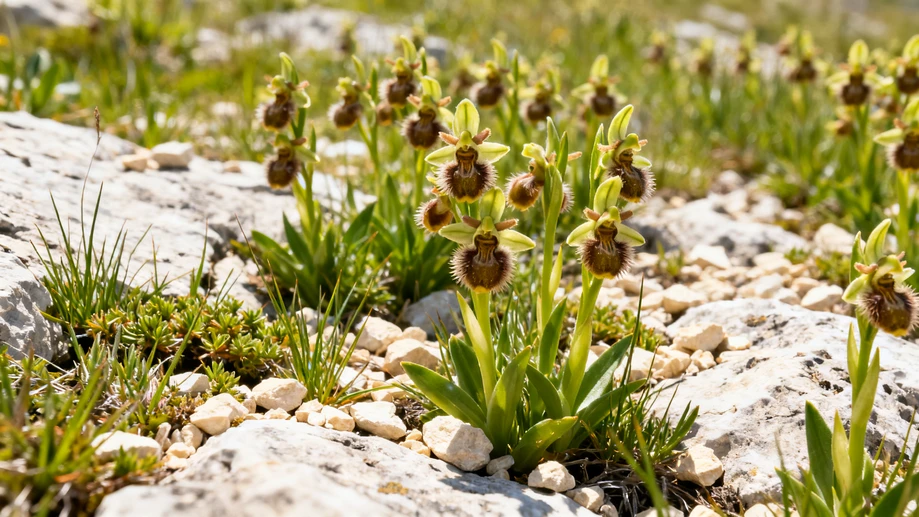
Most wild orchid species that grow on sunlit limestone hillsides across temperate zones do not produce any sugary nectar to reward passing pollinators, a trait that once confused botanists for decades until they took close high-resolution shots of the flower structures at different blooming stages. The lowest and largest petal of each bloom, called the labellum, grows into an exact three-dimensional replica of a winged female bee resting on the surface of the plant, with no mismatched curves or odd proportions that would break the illusion for passing flying insects. The color of this special petal even matches the exact shade of the local bee species’ exoskeleton, adjusted slightly based on the ultraviolet light that most pollinators can see far better than other living organisms in the surrounding habitat.
The fine details of the labellum go far beyond basic shape and color to pull off this elaborate deception. Tiny, hair-like protrusions cover the entire surface of the modified petal, with exactly the same length, thickness and distribution pattern as the sensory hairs that grow on the back of a mature female bee. The edges of the structure are outlined with faint translucent markings that perfectly mimic the thin vein patterns on a female bee’s folded wings, and the subtle matte texture of the tissue even reflects light in exactly the same way as a real insect exoskeleton. For male bees looking for a mating partner, there is no visible difference at all between the orchid petal and an actual female waiting to breed, even when the insect hovers less than a centimeter away from the bloom to inspect the target closely.
As the male bee lands on the false female structure to attempt mating, the rigid curved shape of the labellum tilts under the insect’s weight at a precise angle that presses the bee’s head directly against the two tiny sticky pollen sacs tucked just above the fake insect shape. The sacs adhere firmly to the fur on the bee’s forehead, and stay attached even when the confused insect flies away to look for a more responsive mating partner. When the same bee lands on a second orchid bloom of the same species, the pollen sacs are pressed directly against the sticky receptive stigma on the new flower, completing the entire pollination process without the orchid spending any energy on producing nutrient-rich nectar that takes huge amounts of photosynthetic resources to generate.
This highly specialized physical trait also brings unexpected additional benefits to the orchid colonies that carry the exact labellum shape. Many herbivorous insects and small grazing invertebrates that feed on soft flower petals and young tender leaves will avoid approaching the area directly around the orchid bloom, as they mistake the fake bee shape for a real, active insect that might sting or chase them away from the site. This passive deterrent effect cuts down the rate of petal damage and young leaf consumption by over 60 percent compared to other local flowering plants that do not carry similar deceptive structures. The orchids do not need to produce bitter defensive chemical compounds in their tender tissues to fend off plant-eating organisms, saving even more energy that can be directed towards producing more seeds for the next generation.
Field surveys of wild orchid colonies across multiple temperate habitats show that this specific physical adaptation gives the deceptive orchid species a clear competitive edge against other local flowering plants. The species can support 30 percent more individual plants per square meter of suitable habitat than other nectar-producing flowering plants that rely on generalist pollinators, as they do not need to divide limited environmental resources between growth, nectar production, and pollinator attraction. Over millions of years of natural selection, the tiny variations in labellum shape that make the illusion just a little bit more convincing have been preserved and amplified, leading to the incredibly precise mimicry that can be observed on every fully grown orchid bloom in undisturbed wild habitats.