
Have You Noticed How Many Wild Orchids Fool Unsuspecting Insects With Their Uncanny Flower Shapes
This little known wild orchid trait relies entirely on ultra-specific petal structures to skip offering nectar and complete all pollination cycles with zero extra energy cost
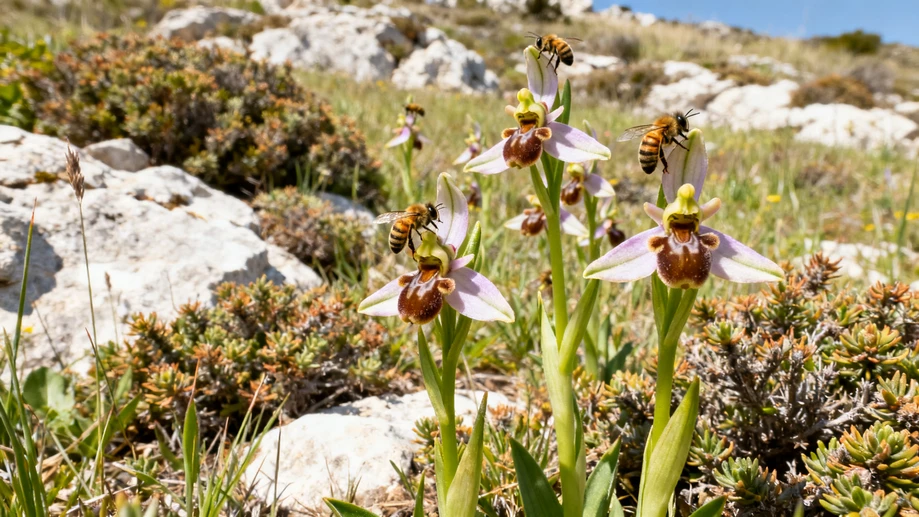
Late spring sunlight filters through thin layers of low scrub across undisturbed Mediterranean limestone hills, spilling over patches of fine silver grass to land on clusters of tiny, unassuming wild orchid blooms. At a quick glance, these flowers do not look much different from other small wild blooms dotting the slope, but a closer look reveals details so precise they seem intentionally crafted by invisible natural forces. The broad lower petal of each bloom bears a near-perfect outline of a female solitary bee, dotted with fine dark fuzz that catches the light the exact same way the hard segmented exoskeleton of a real bee does, marked with faint vein-like lines that match the tiny patterns running across a bee’s folded wings. The edges of the petal curl just slightly to mimic the rounded, plump abdomen of a resting insect, creating a visual illusion sharp enough to catch the attention of any passing male bee within a 20 meter radius.
The trick these wild orchids pull off does not end at visual mimicry, even though the petal shape is the core foundation of their entire survival strategy. Specialized glands dotted along the fuzzy surface of the mimic petal release tiny concentrations of chemical compounds that are nearly identical to the mating pheromones produced by sexually receptive female solitary bees. The exact blend of scents shifts slightly across different orchid species, each tuned perfectly to match the unique pheromone profile of one single local bee species, leaving no room for error. The shape of the petal is calibrated to align perfectly with the instinctive mating behavior of the target male bee, so the insect lands on the curved surface at the exact angle that presses its forehead against the sticky pollen blocks tucked into the upper narrow part of the orchid bloom.
Unlike most common flowering plants that spend huge amounts of stored energy producing sugar-dense nectar as a reward for visiting pollinators, these orchids divert nearly all of their limited nutrient resources away from nectar production to refine every tiny detail of their mimic petal. This strategy works exceptionally well on the thin, nutrient-poor limestone soil where these orchids grow, where there is barely enough mineral content to support rapid growth, let alone the massive metabolic cost of churning out high-sugar nectar day after day during the short blooming window. Researchers tracking wild orchid populations have recorded that this shape-driven mimicry strategy delivers three times higher pollination success rate than generalist wild blooms that rely on random passing insects, because the targeted bees will travel far further to seek out more “potential mates” and carry pollen between orchid plants that grow dozens of meters apart.
There is a quiet, unexpected layer of co-evolution tucked into this tiny physical trait that most casual observers never get to witness. Over thousands of generations, the local solitary bee species has evolved slightly sharper visual and chemical detection abilities to avoid being tricked, which in turn pushes the orchid populations to refine their petal shape and pheromone blend even further to keep up with the shifting standards. This ongoing back and forth has resulted in some regional wild orchid variants that have petal details so specific they only match the exact bee population found within a 10 kilometer radius, and cannot successfully fool bee groups from neighboring valleys even if they belong to the same species. No other flowering plant genus on the planet has evolved such a wide range of hyper-specialized shape-based mimicry strategies as the orchid family, with more than 300 separate wild orchid species relying on this exact petal trick across every continent outside of Antarctica.
Most of the ornamental orchids sold in commercial markets no longer carry these hyper-detailed mimic petal traits, as their reproductive cycles are managed in controlled growing spaces where wild pollinators never come into contact with the blooms. That is why this specific small quirk of wild orchid biology remains such a little known secret for most people who only interact with orchids as potted houseplants or cut floral arrangements. The only place to spot these near-perfect insect mimic petals in their natural context is in undisturbed wild habitats that have not been cleared for agriculture or residential development, where the tiny co-evolutionary dance between the orchids and their target bees can continue uninterrupted for generations.