
Did You Know Rhododendron Petals Have Built-In UV Landing Strips for Bees?
Discover how nature's hidden patterns turn these common flowers into pollinator magnets with secret visual signals.
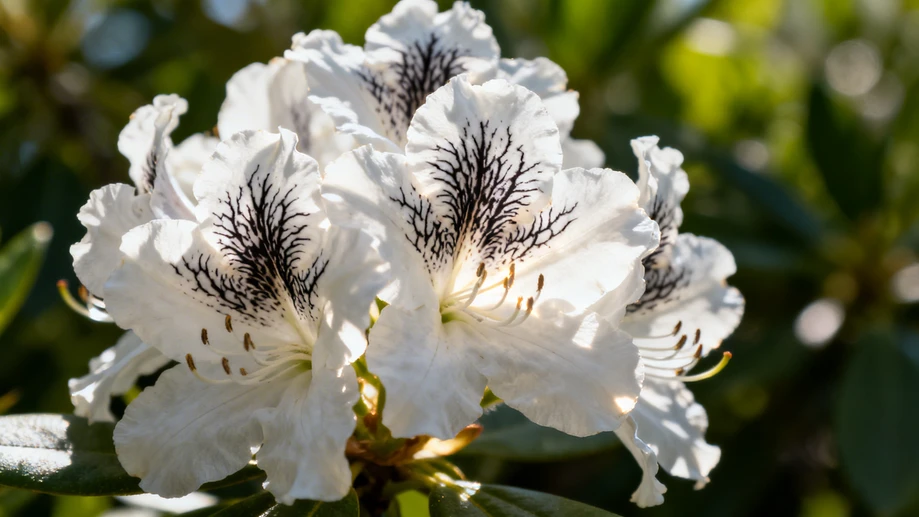
You've probably admired rhododendrons in gardens or forests, drawn by their vibrant clusters of trumpet-shaped blooms. But next time you see one, look closely at the petals. Those delicate speckles and streaks aren't random decorations – they're sophisticated navigation tools designed by evolution. While humans see colorful patterns, bees perceive something entirely different through their ultraviolet vision. The markings form luminous landing strips invisible to our eyes, guiding pollinators directly to the nectar buffet like runway lights for insects.
These UV pathways serve a critical survival function. Research shows bees follow the contrasting patterns five times faster than plain petals, significantly boosting pollination efficiency. The streaks typically concentrate near the flower's center, creating a high-contrast target against the petal background. As bees approach, the patterns shift in intensity like airport runway markers, providing precise directional cues. This clever system ensures pollen transfer even on crowded branches where individual flowers might otherwise get overlooked.
Interestingly, not all rhododendron varieties use the same signaling strategy. Alpine species often develop bolder patterns with higher UV reflectance to stand out in misty mountain habitats. Forest varieties might employ more subtle gradients optimized for shaded environments. Some even feature "nectar guides" – tiny dots leading to the sweet reward like breadcrumbs. This adaptation explains why certain rhododendrons attract specific pollinators while others remain undisturbed, a delicate balance perfected over millennia.
Gardeners can observe this phenomenon firsthand during peak bloom season. Notice how bees consistently approach flowers from the same angle, following the petal highways with unerring accuracy. On cloudy days when UV light diminishes, you'll see pollinators circling longer before landing – nature's backup system faltering without its visual cues. This intricate relationship demonstrates how flowers actively communicate with insects through petal artistry, turning a simple garden visit into a masterclass in biological engineering.
Beyond pollination, these ultraviolet patterns influence rhododendron resilience in changing climates. Studies indicate varieties with stronger UV markings maintain more consistent bee visitation during temperature fluctuations. As environmental shifts disrupt traditional pollinator routes, these built-in navigation systems become increasingly vital for species survival. The humble petal spots represent not just beauty, but an enduring conversation between plant and pollinator that sustains entire ecosystems.